When the Album Became a Listening Sequence
Explore how album formats shaped the album listening sequence, and use a simple listening plan to hear how track order changes transitions and mood.
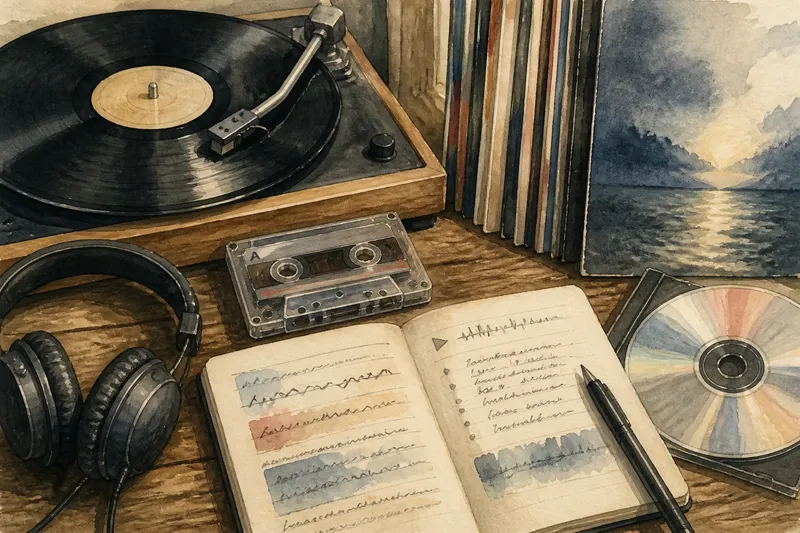
You put a record on while making tea, then notice that the next song seems to answer the last one. That small moment captures what an album listening sequence can do: turn separate tracks into a passage through time. Its history is tied to changing formats and listening habits, rather than to a single technological leap.
From collection to sequence
The word “album” once described a collection of separate records gathered together, much like pages in a book. Early commercial recordings were short, and listeners might buy or assemble several discs to hear a group of performances. The tracks belonged together because of a performer, subject or purchaser’s choice, but their order was not necessarily part of the composition.
Long-playing records offered more music on each side than earlier short-playing discs, making it practical to hear a longer sequence before changing records. The exact capacity depended on the recording and format, so the change was not a fixed threshold. Side divisions still mattered: a record required a pause and a turn, and the first track after that break could feel like a fresh beginning.
This physical arrangement gave track order a particular shape. An opening could establish a mood, the middle could change pace, and the final track could leave an after-effect. These were possibilities, not rules. Some albums offered a linked musical argument; others gathered songs whose order was useful but not essential.
The album listening sequence
An album listening sequence is the ordered path through its tracks, including the transitions, pauses and changes in attention that order creates. It is more than a playlist with a fixed track count. A sequence can make a contrast feel deliberate, place a quiet song after an intense one, or give a repeated sound new meaning when it returns.
Formats shaped how listeners moved through that order. On a record, the side break interrupts continuity but also offers a natural pause. Cassette tapes made a sequence portable, though locating a particular song could involve fast-forwarding and listening for its entrance. Compact discs enabled direct track selection and longer uninterrupted play, allowing both complete listening and quick access to favourites.
Each format also invited different gestures: taking a record from its sleeve, turning a cassette over, or pressing a track number. These actions did not dictate attention, but they made some listening choices more immediate than others.
Changing listening habits
Portable players brought albums into private, mobile listening. A sequence could accompany a walk or commute, with interruptions from streets and daily tasks rather than a side ending. Listeners also recorded selected songs onto cassette, making personal sequences for a journey, a mood or someone else.
Digital libraries loosened the link between a song and its original album. Listeners could select individual tracks, shuffle a collection or build playlists across artists. Streaming made those options readily available while leaving album order as another choice. This shift did not turn attentive listening into distracted listening: someone might follow an album on headphones, skip tracks while cooking or arrange a playlist for an evening.
Track order still conveys choices about pacing, recurring ideas and relationships between neighbouring songs, even when a listener does not follow it. Hearing the album in order can make those connections apparent; selecting tracks individually can draw attention to other qualities, such as a singer’s voice across different arrangements.
A week of listening
Use this plan to compare the album’s sequence with other ways of hearing it. Choose an album that fits the time you have, and use the same version throughout where possible. For each session, note one audible observation and decide what it suggests about the order.
- Hear the order: Play from the opening track to the end. If a mood or pace changes noticeably, note the tracks around that change; if it does not, note whether the album feels more like a collection than a continuous arc.
- Listen to transitions: Focus on each track’s ending and the next entrance. If a sound, rhythm or silence links them, treat that as a cue to the sequence; if they feel sharply separate, consider whether the contrast itself affects the pacing.
- Pause at the side break: With a record, stop to turn it over; with a digital version, pause at the corresponding point. If the return feels like a new section, note the change; if it feels continuous, note what carries across the pause.
- Choose a track directly: Start with a remembered song, then play its preceding and following tracks. If the neighbours alter how the chosen song feels, note the connection; if not, consider whether it stands independently.
- Make a short personal sequence: Choose a few album tracks for a specific occasion, such as a walk, and arrange them in a new order. If the new opening sets a clearer mood, keep it for that purpose; if the ending feels abrupt, move a more suitable track to the close.
- Return to the full album: Play the original sequence again. If a transition or pause now stands out, record what changed in your attention; if your impression is much the same, the listening plan may have reinforced rather than altered your first response.
Say you choose an album with a reflective opening, a noisy middle and a soft final track. You first play it from start to finish and note that the soft track feels like a release after the noisy section. For a quiet evening, you then place that soft track first in a short sequence, followed by the reflective opener and one quieter song from the middle. The resulting order makes the soft track set the mood rather than close the album; if the sequence now feels too subdued, you could restore the reflective opener to the beginning. This is an invented illustration of how order can change a song’s role without changing its recording.
What listeners often ask?
Why does track order matter?
Order shapes expectations: a lively song after a quiet one may feel like a release, while the same song at the start can sound like an invitation. Neighbouring tracks also affect how transitions and endings register.
Does an album need one theme?
No. A sequence can cohere through sound, pacing, recurring images or performance style without telling one continuous story. Some albums are linked works; others gather songs without a single message.
What changes when you use shuffle?
Shuffle creates new pairings between neighbouring tracks and can make individual songs stand out in unexpected ways. It also changes the planned pacing, so it is less useful for hearing transitions that depend on the original order.
Can a playlist feel like an album?
Yes, if its order and overall shape matter to the listener. An album generally arrives with an established sequence, while a playlist is often assembled or rearranged for a particular purpose.
Listening across formats
The same album can be heard through speakers, headphones, a record player or a streaming app. Each route invites different habits, but none dictates a correct response. A phone makes track selection easy; a record requires a physical change at the side break; headphones may make a quiet transition easier to hear in a noisy place.
To compare approaches, keep the music constant and change the order in which you listen: hear the full album, select a few tracks, then make a short personal sequence. Notice what each arrangement leads you to expect. The album listening sequence is a musical choice to notice, not a rule about how to listen.
After an album ends, leave a moment before choosing another track. That pause can help you hear whether the ending feels complete, open-ended or ready to begin again. The album listening sequence remains available to listeners who follow it, adapt it or simply use it as a point of comparison.