A Listening Walk Through a Folk Tune
A listening walk through a folk tune helps you hear its returning phrases and subtle changes, using a simple, repeatable approach with any recording.
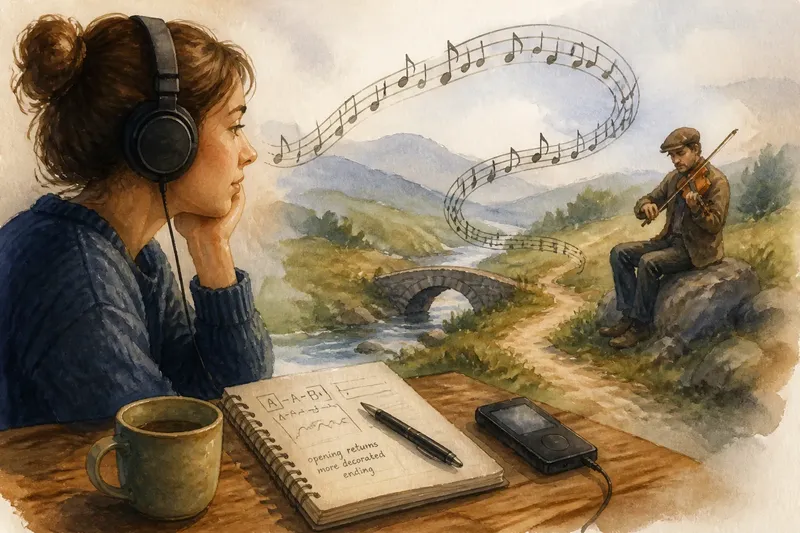
The kettle clicks off as a fiddle phrase circles back, almost as it did before. A listening walk through a folk tune gives you a way to follow that return: notice a phrase, hear what changes, and let the tune’s shape emerge without reading notation or naming its region.
This is a listening habit, not a claim that every folk tune works alike. Use it with a song, a solo instrument or a small ensemble. The aim is to notice a tune’s recurring ideas and the choices a performer makes each time they return.
Choosing a recording
Pick one recording that is easy to replay and short enough to hold in mind. A solo fiddle, flute, voice or accordion can make the melody clear; a group performance works too if you can follow one instrument or singer through the texture. Begin with one version rather than comparing several at once.
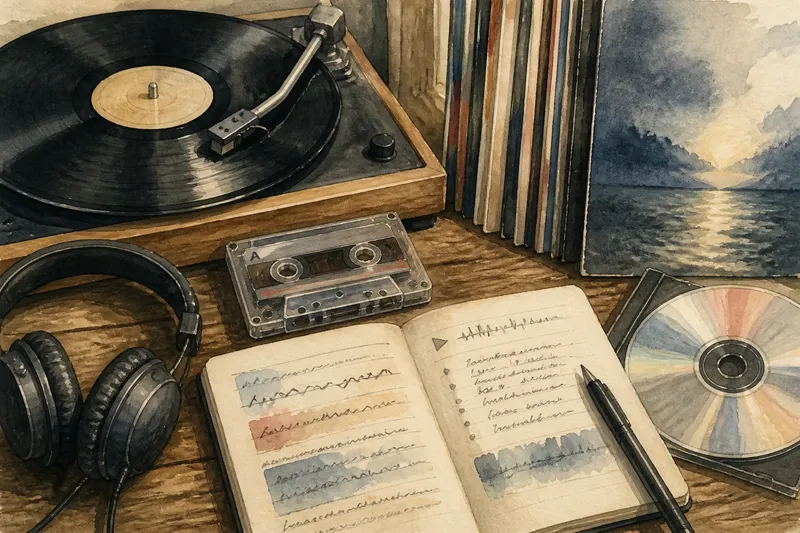
A streaming app with a repeat function, a local audio file or a CD player is enough. Headphones can help separate a quiet ornament from the rest of the sound, but a speaker in a quiet room is suitable. Keep the volume comfortable and the playback controls nearby.
Hearing the main ideas
On the first play, listen all the way through without pausing. Notice the broad movement: perhaps the tune rises and settles, circles around a few notes or travels in longer arcs. A plain-language note such as “opens out, then comes home” is enough to remember the impression.
Listen next for where one musical thought seems to end and another begins. A phrase is a short idea that can sound complete or invite a continuation. In a song, the words may help you hear its boundaries; in an instrumental tune, a pause, held note or change of direction can serve as a landmark. These are clues rather than fixed rules, since a melody can flow across a breath or pause.
Recognising returning phrases
On another play, listen for an idea that comes back. It could be the opening, a familiar ending or a short pattern that appears in several places. Ask what makes it recognisable: a rising shape, a resting note, a rhythmic pattern or a similar turn in the melody.
You can describe the pattern without transcribing it: “three quick notes, then a longer one”, for instance. If the tune repeats a section, compare the second appearance with the first. A singer may repeat the same words; an instrumentalist may keep the melodic outline. Either gives you a clear point of comparison.
Variation and tune shape
A variation changes how a musical idea is presented while leaving enough of its identity for you to recognise it. The melody might keep its broad outline while the player adds quick notes, stretches a sound, shifts an accent or changes the timing. A singer may phrase repeated words differently.
Imagine a solo flute recording in which a phrase rises, pauses and falls. On its second appearance, the player adds a flutter of notes before the pause, but the rise and fall remain clear. You might jot down “same arc, busier approach”. That captures continuity and change without ranking the versions or judging their authenticity.
Once you recognise a few phrases, listen to their order. Does one idea return after a contrasting passage? Does the tune build towards a stronger point, then settle? If it helps, mark a new idea with A and a clearly different one with B; a sequence might read A–A–B–A. Treat this as a memory aid, not a formal analysis, and leave a gap if you are unsure.
In a song, words add another clue. Repeated lines may bring back a melody, while changed words can shift its mood or meaning. Notice whether the singer changes the tune to suit the text or keeps the melodic shape steady.
Why performances differ
A tune may be shaped through performance rather than treated as a fixed sequence of identical sounds. Musicians make choices about pace, emphasis, ornament and phrasing; instruments, other players and the setting also affect what reaches your ear. Those differences do not make one recording a definitive version.
If you later compare recordings, keep the question narrow. Follow how each performer handles the same returning phrase instead of trying to judge every part of both arrangements at once. When a tune belongs to a particular community or practice, seek out context from people connected to that tradition; a recording alone may not explain its history or use.
Keeping your place
If your attention wanders, return to a landmark such as the opening or a repeated ending. Replay from there and listen for the next familiar point; there is no need to rewind after every missed moment. A short loop in a phone app or audio player can help you focus on a passage, but listen to it in the full tune afterwards so its context remains clear.
After playback, hum a rough outline if you like. Matching the original key or pitch is unnecessary. The remembered contour can help you recognise a return, while revealing which details your memory has left out.
Questions about folk tune listening?
Do I need music theory?
No. Terms such as phrase and variation can be useful, but everyday descriptions work just as well. Follow the tune through its rises, pauses and returns without reading notation.
Are headphones necessary?
No. Headphones may make a quiet ornament or individual instrument easier to distinguish, while speakers can suit a group performance. Choose the option that lets you listen comfortably.
Is a repeated phrase identical?
Not always. It may keep its main shape while changing its timing, ornament, emphasis or notes. Those differences are part of what a replay can bring into focus.
Can I use this approach with a song?
Yes. Follow the melody as well as the words, noticing which lines return and whether the singer changes their phrasing. Familiar lyrics can mark a passage, but listen for what the performance does with each return.
For a useful stopping point, write one sentence about a returning idea and one change in its later appearance. A note such as “the opening returns after a contrasting phrase, with a more decorated ending” gives you a clear reason to hear the recording again. A listening walk through a folk tune need not map every detail; it can leave the next hearing open to a different discovery.